Keepsakes, gifting & personalized books
A Personalized Storybook With Your Child's Photo: When the Child Is the Hero
October 10, 2026
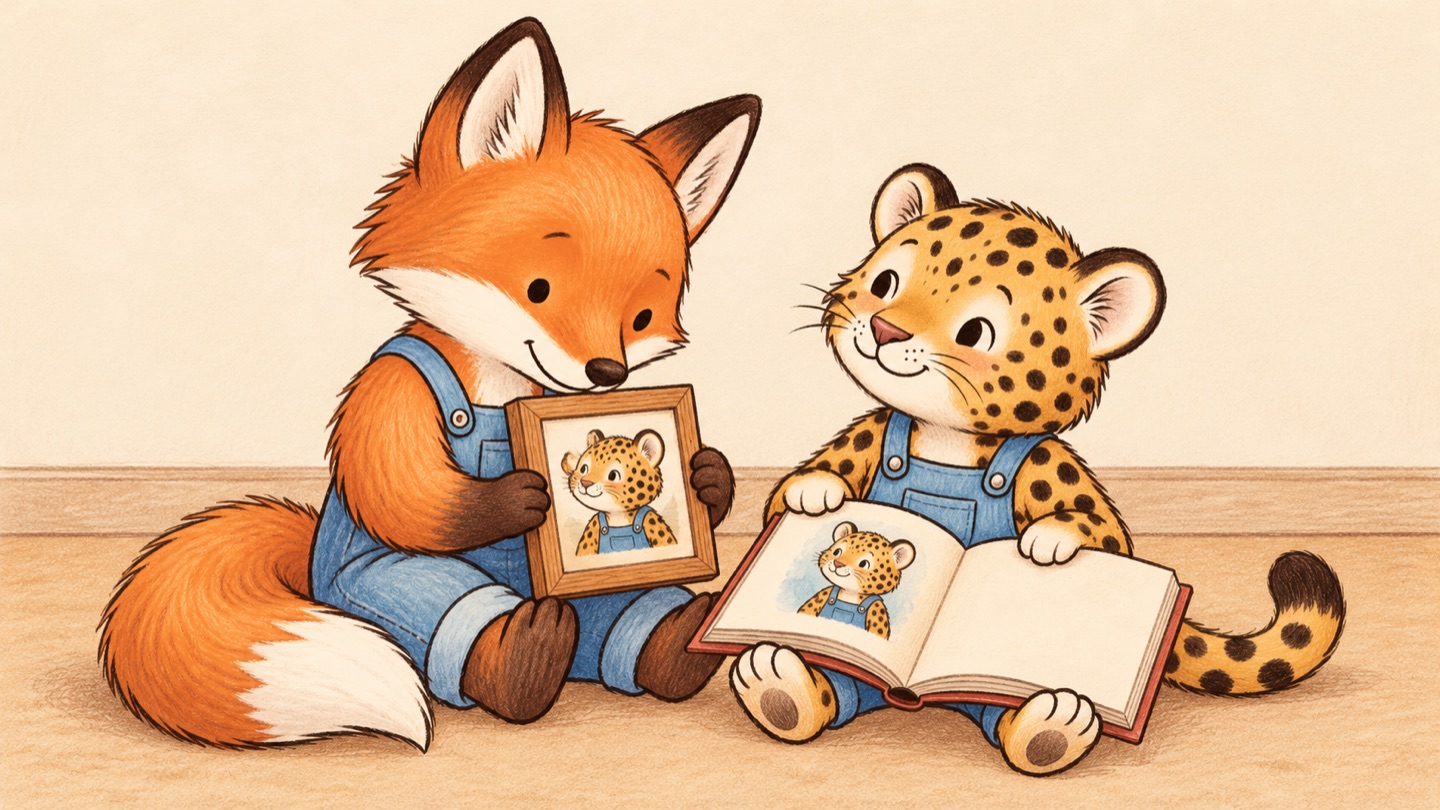
There is a particular silence that falls over a child when they turn a page and see themselves looking back. Not a cartoon stand-in. Not a generic blond kid named after them on page one and forgotten by page three. Themselves — their face, their hair, their name woven into the story — riding a paper boat across a sleepy river or tiptoeing past a dragon who only wants a hug. A personalized storybook with your child's name and photo turns the most ordinary moment of the day, bedtime, into something that feels made just for them, because it was.
This guide is for parents and grandparents who are curious about that kind of book and want to understand it honestly before they create or gift one. We'll cover how a photo actually becomes a story, the one quality detail almost no one talks about, why seeing themselves matters more than it seems, and how to tell a thoughtful keepsake from a quick novelty.
The seed: a photo becomes a story where your child is the hero
The idea is simple and old. Children have always loved hearing stories with their own name in them — it's why parents have improvised "and then you opened the magic door" for generations. What's new is that a single photo can now carry that personalization all the way through an illustrated book.
You upload a clear photo of your child. From that image, an illustrated character is created — same hair, same skin tone, same bright expression — and that character becomes the protagonist of a complete story. Your child doesn't appear in the book. Your child is the book: the one who calms the storm, befriends the lonely fox, finds the way home. For kids aged roughly 0 to 6, the age of intense self-discovery, this is electric. They are learning who they are, and here is a whole world that agrees they are someone worth a story.
How a personalized storybook with your child's photo actually works
Honest, plain, three steps — no overpromising:
- Upload a photo. One clear, well-lit picture of your child's face is enough. This becomes the visual seed for the illustrated hero.
- Choose the language and the theme. Pick English or Spanish, then a theme that fits your night — a calm adventure, an ocean journey, a story about being brave or being kind.
- Read it in the app. The finished, illustrated story appears to read together at bedtime. If you love it, you can order a printed hardcover to keep.
That's the whole arc. No design skills, no waiting weeks for a proof before you've even seen the story. You see it, you read it, and only then do you decide whether it deserves a permanent place on the shelf.
The detail nobody talks about: character consistency across pages
Here is the single most important thing to understand before you buy a personalized photo storybook, and almost no product page will tell you: does the child look like the same child on page 1 and on page 20?
Many personalized books rely on a face-swap or a static photo cutout pasted into pre-drawn scenes. It looks fine on the cover. But turn the pages and the magic breaks — the face shifts, the proportions drift, suddenly the "hero" looks like a different kid in a different art style. A four-year-old notices this instantly. The spell that made them whisper "that's me!" quietly dissolves.
True character consistency means the illustrated child is genuinely the same character throughout: same face, same hair, same little gap-toothed smile, whether they're climbing a hill on page 3 or falling asleep under the stars on page 18. Mismo niño, misma cara, en cada página. This is the difference between a sticker on a template and a real book starring your child. When you evaluate any personalized storybook — from any maker — page through the full sample and watch the face. Consistency is the quality signal that separates a keepsake from a gimmick.
Why seeing themselves matters: the gentle research
This isn't only sentiment. A modest, well-grounded body of research suggests personalization genuinely helps young children.
In a controlled preschool study, children showed significantly better knowledge of target words that appeared in the personalized sections of a picture book than of words in the non-personalized sections — direct evidence that putting the child at the center of the story supports word learning (Kucirkova, Messer & Sheehy, 2014, First Language). Personalization isn't just charming; it changes how attention lands on the page.
There's also the broader case for reading itself. The American Academy of Pediatrics recommends shared reading from birth through at least kindergarten, noting it supports brain development tied to language, literacy, and emotional regulation while strengthening the parent-child bond (AAP, Literacy Promotion in Primary Care Practice). A personalized bedtime book is, at its core, just a more inviting reason to keep that nightly ritual going.
And representation matters. The educator and scholar Rudine Sims Bishop's well-known framing describes books as "mirrors and windows" — children need to see their own lives reflected back and to glimpse lives unlike their own. When a child doesn't recognize themselves in any of the stories they read, that absence can quietly dampen their engagement with reading. A book where your child is unmistakably the hero is, in a small way, a book that says you belong on the page.
Written natively in two languages — not machine-translated
For bilingual and heritage-language families, language is not a checkbox. A story "translated" word-for-word from English into Spanish reads stiff and foreign to a native ear, full of phrasing no parent in Mexico City or Bogotá would actually say at bedtime.
The better approach is stories written natively in each language. At Estori, English and Spanish are both first languages from day one — the Spanish version is composed in warm, neutral Latin American Spanish (español neutro), not run through a translator. For a family raising a bilingual child, or a grandparent who wants the story in the language of their own childhood, this is the difference between a book that sounds like home and one that sounds like a manual. If keeping a heritage language alive at bedtime matters to you, our bilingual bedtime reading guide goes deeper.
The quiet worry: is AI-made content safe for my child?
Read the whole story before sharing it with your child. Check the language, the pictures and anything that might feel frightening or confusing to them. estori uses AI to create the story and illustrations; it does not provide educator review of each book. Your own reading of the finished story is an important part of choosing what to share.
A keepsake, and a gift: the digital heirloom
For grandparents, aunts, and uncles, a personalized photo storybook is one of the rare gifts that is both deeply personal and genuinely lasting. A birthday, a bautizo, the first Christmas, a new-sibling welcome — these are the moments a printed hardcover earns its place. Unlike another plastic toy, a book starring the child becomes a thing the family keeps: read a hundred times, then shelved, then handed down. That's the heirloom idea — a book that outlives the season it was given in.
How to choose a good personalized storybook (even if you don't buy ours)
A short, honest checklist:
- Character consistency — page through a full sample; the child should look like the same child throughout.
- Native-language writing — especially for Spanish, make sure it reads naturally, not translated.
- Age-appropriate content — calm, kind, no scary surprises, ideally with some childhood-development input.
- Print quality — if you want a keepsake, check the hardcover, paper weight, and color.
- See the story first — you should be able to read it before committing to print.
FAQ
What kind of photo works best for a personalized storybook? One clear, well-lit photo of your child's face, looking toward the camera, with hair visible. You don't need a professional shot — a good phone photo in daylight is plenty.
Will my child look the same on every page? With a quality book, yes — that's the whole point of character consistency. Always page through a full sample to confirm the face stays the same from the first page to the last; some makers don't manage this.
Can I get the story in Spanish? Yes. At Estori, stories are written natively in both English and neutral Latin American Spanish from the start — not machine-translated — so the language sounds the way a parent actually speaks at bedtime.
If this sounds like a bedtime your family would love, you can create your first personalized story free and read it together tonight. And if your child can't stop turning the pages, you can keep it forever as a printed hardcover keepsake — the kind of book a family hands down. No rush, no pressure: see the story first, then decide.